
I’ve been working in the design industry now for a long time now, and one of the things that I love most is that its constantly-evolving. 2023 promises to be no different, so if you’re thinking of getting into design or looking for new opportunities, here’s what’s going on.
Going Digital
Design, and digital design in particular, make up some of the most sought-after roles today and according to the labor department in the US, it’s growth is set to continue over the next decade.
Currently these are the six most popular roles that appear:
- UX designer – Ensures the product you’re using is useful. Instead of making things look “pretty,” they are responsible for creating prototypes and user workflows, validating business ideas, and more.
- UI designer – Work primarily with graphical user interfaces (GUIs). Responsible for developing a visually appealing and user-friendly interface. Work closely with UX designers.
- Product designer – A flexible role that is sometimes considered a full-stack designer. They might be responsible for UX, UI, coding, project management, problem-solving, or all of the above.
- Digital designer – Creates solutions for websites, product graphics, email templates, social media graphics, brand campaigns, and photography. Usually work on a team or as a freelancer.
- Graphic designer – Create visual designs, like a magazine layout, using visually appealing elements. There are several types of graphic design, including visual identity graphic design, marketing graphic design, and UI graphic design.
- Motion designer – Responsible for animated artwork that can be published on the web, television, social media, augmented reality technology, and film.
Surprisingly, even though there is now a greater focus on design for digital spaces, requests for traditional graphic designer has grown over the last year and projected to increase by 3% over the next year. So, it seems print isn’t quite as a dead as we’ve been led to believe. 🙂
Requests for print grew by 2% this year. 82% of consumers still trust print ads the most when making purchase decisions. Digital campaigns see a 400% higher return when print marketing is used as a supplement.
designpickle.com
Working together for the greater good
Whether on a small project or the global level, collaboration in design has become more prevalent from different design disciplines, such as graphic design, industrial design, and UX design, working together to create solutions that bridge both the physical and digital worlds or large scale projects such as Design for good – a non-profit alliance of leading global organisations that wants to harness the creative talent of thousands of designers to design and deliver positive impact against the United Nations’s Sustainable Development Goals.
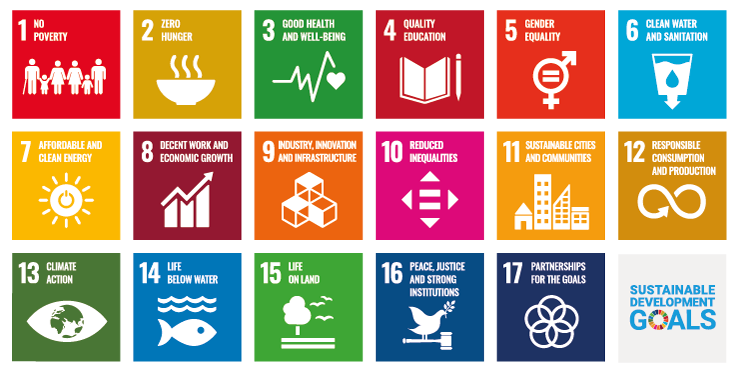
The world is looking for a design solution for very complex problems, working to ensure not just people benefit from it but so does the environment. Fuelled by the climate crisis and the need for us a species to adapt, designing for sustainability has emerged as an a approach that aims to reduce the negative impact of design on the environment.
Inclusivity is also a key area of design that is now, finally, has a greater importance , ensuring that ALL people benefit and a part of the process. Which has also given rise to ethical design, which refers to design that resists manipulative patterns, respects data privacy, encourages co-design, and is accessible and human-centred.
All of these ideas will require designers to collaborate and build better tools together.
AI as an opportunity rather than a replacement
It’s unlikely that you haven’t heard of ChatGPT, amongst other AI tools by now, tools that help people write code, generate ideas, analyse tons of data and execute digital marketing. But what does it mean for the design industry? Are we all going to be replaced by robots?
Well, I think the answer to that is, not quite. 🙂
It can become an indispensable tool for designers, as AI-powered design tools are able assist in automating repetitive tasks, enhancing creativity, and predicting design trends. Designers are increasingly collaborating with AI to streamline their workflows and unlock new possibilities.
Designers should not worry at the moment, AI and robots will not replace us, at least in the short term.
Will we just need to leverage these design opportunities and co-create with AI, using it to create more effective and useful tools and products.
After all, technology in the past made us stronger and faster. AI should hopefully do the same.